The Argument of Us

Updated: May 22
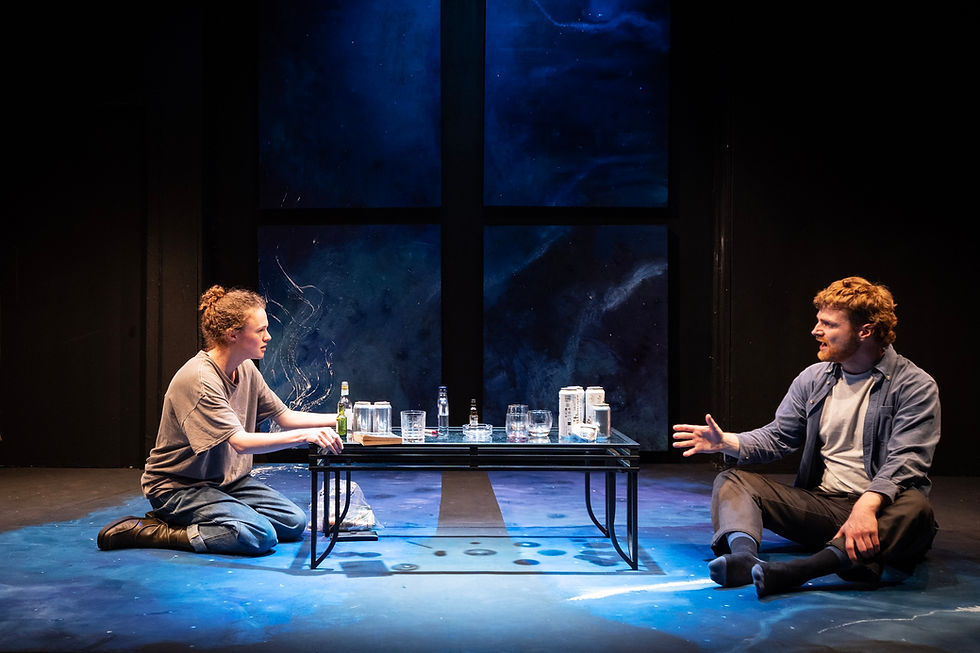
Gemma Allan and Darren Mone in The Argument of Us. Image, Al Craig
***
Ten years together, one year on the rocks, seven weeks apart. In Colm Maher’s The Argument of Us, Rhys and Bishop dredge through their relationship hoping to find something worth remembering. Working through a modest plastic bag of small spirit bottles, determined to be truthful to the bitter end, that stalwart theatrical device, alcohol, lubricates their way to truth, or at least to what they claim they really think, whilst allowing them conveniently abdicate responsibility the following morning. Maher’s final twist as to whether they’ll choose to be or not to be a clever, bittersweet reversal. Yet even with two invested performances, The Argument of Us doesn’t quite land. Leaving you not really knowing who these people are, with much of what’s discussed feeling contrived.
Having agreed to a night of radical honesty, Maher’s literary loving, holiday hipsters name-drop books and locations as if facts were truths. He’s a mediocre writer, she’s a mediocre botanist. Fact. But neither fact defines these character’s truth even though the other tries define them by it. Both are self absorbed, passive aggressive manipulators. Truth. Played out like a Socratic dialogue, the back-and-forth Q&A feels like deductive reasoning with memory prompts. But which memories do you select as prompts? As for truth, the longer it goes the less you believe they're really in search of it. Each looking to justify their one-upmanship, judgemental blame game. Needing to make a choice even though believing attraction and behaviour is already determined. Which, one would assume, means the outcome is also determined. As their struggle for power and dominance proceeds, their radical honesty begins to look more and more dishonest. The ending, unconvincingly convenient yet having bite, leaving you to ponder.
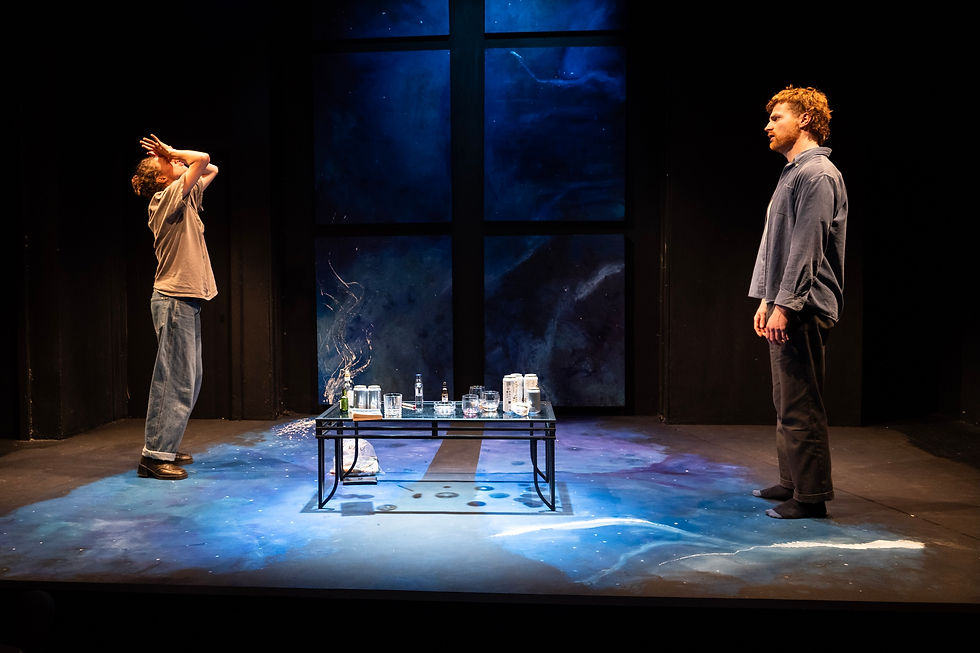
Gemma Allan and Darren Mone in The Argument of Us. Image, Al Craig
Throughout, a sense of if we talk it all out and think it all out it we can figure it all out looms like justification. Which is like believing you can figure all the answers to all the questions. As a result, characters don’t really talk so much as lecture someone who defensively half listens. There’s concessions, compromises, but no meaningful breakthroughs. Lots of fumes but no real heat in their conceptual sword fighting. Further compounded by the author’s voice dominating dialogue like its shifting between two sides of the same idea or argument. Compositionally staid, apart from a delightfully clever race around the table, two impressive performances from Gemma Allan and Darren Mone invest characters with a richness that elevates the text. Martin Cahill’s set simple and effective, with Cathy O’Carroll’s lights adding mood. But director Iseult Golden struggles to find the fire. The Argument of Us sparking occasionally, but never quite igniting. In fairness, Maher’s taut script reads like a radio play, reliant on sentences rather than stage action.
The much loved, warm welcome for Bewley’s Café Theatre's front of house, Maher is also an exceptionally talented lighting designer. A genius MacGyver who could recreate Parisian nightlife onstage with just a cocktail napkin and a torch. Like An Argument of Us, Maher proves he’s unafraid of putting himself out there and taking a risk. Yet even desperately wanting it to be otherwise, like its two star-crossed protagonists, An Argument of Us struggles to come together. There’s a sense the effortlessly charming, eternally youthful and endearingly good looking Maher might be too close to the material in its current incarnation. The Argument of Us an interesting premise that doesn’t quite deliver on its promise. Yet Maher shows serious promise, if only he could get out of his own way.
The Argument of Us by Colm Maher, runs at The New Theatre until May 30.
For more information visit The New Theatre


