The Year That Was 2025

Updated: Jan 5
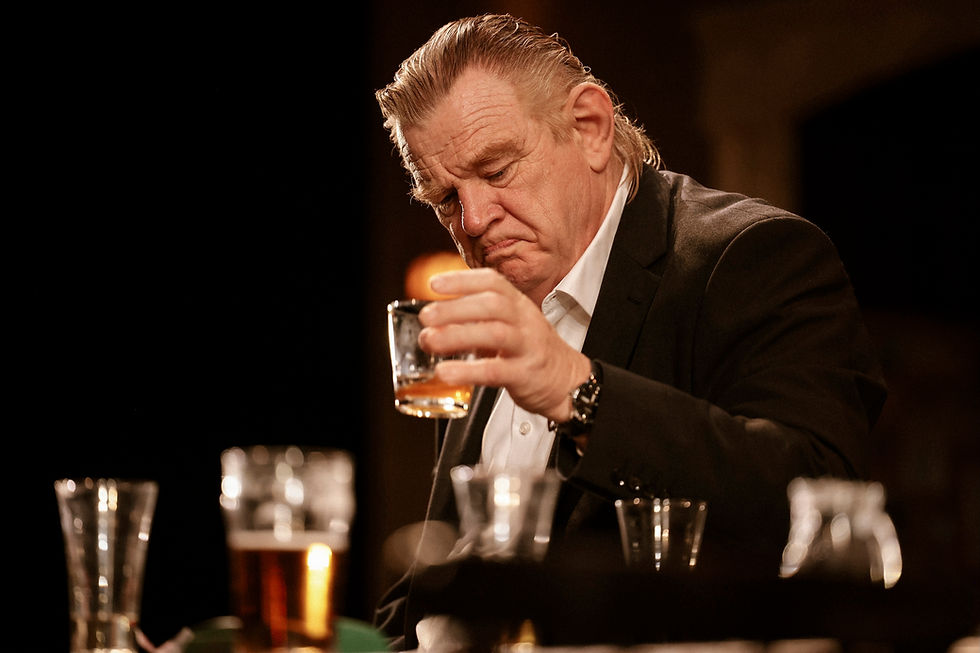
Brendan Gleeson in Conor McPherson’s The Weir. Image, Rich Gilligan
Another year closes, giving way to another new beginning. But first, easing out of another seasonal food coma, let’s commemorate the year that was 2025. Requiring a critical shift from spotlight to floodlight. Separating fairy dust from fairly dusty affairs. 2025 a year you had to kiss quite a few frogs to find your theatrical handsome. Thankfully, there were a few worth kissing. 2025 being a year of countless adaptations, often from other mediums. Of Marina Carr’s endlessly deferred double bill. Of the Arts Council’s loss being Druid Theatre’s gain. Of Druid’s 50th anniversary. The year of Eileen Walsh. The year the shameful handling of The Complex highlighted the precarious nature of support for performing arts. A year of some highs, a few lows, and too many middling productions. A year of unearned, hair trigger standing ovations. A year of some truly impressive talent. Ever mindful of all those productions I never got to see, here are some of the girl boss Dorothys and curtained wizards that constituted 2025.

Poor by Katriona O’Sullivan, adapted by Sonya Kelly. Image, Ste Murray
Beginning in Dublin, where it was business as usual for the Big Two. Both doubling down on predictable fare like corporate, fast food chains. Flashily advertised promises rarely as tasty as their social media plugs. The Gate proving the more flavoursome. If their year began with a lamentable King Lear, Abi Morgan’s far more enjoyable Lovesong followed, before Martin McDonagh’s menacing The Pillowman probed dark and desperate places. Serving as a striking contrast to Katriona O’Sullivan’s Poor, adapted for the stage by Sonya Kelly. A feel good, true story of a working class heroine, O’Sullivan’s light entertainment, Rocky refit knocked it out of the park in terms of bums on seats. The emotional sugar rush due to return in 2026. The Gate rounding out its year with its ho-ho-humbug A Christmas Carol, whose 70s children’s TV vibe delighted kiddies, even if adults might have wished for more.

Éilish McLaughlin and Eileen Walsh in Marina Carr's The God and His Daughter. Image, Ros Kavanagh
Meanwhile The Abbey, likely to be rebranded The Marina Carr Arts Centre (allegedly), continued down its road of good intentions. Taking determined shots at productions of substance, though frequently missing the mark. Yet not always. The emotionally charged, physically theatrical MILK مِلْك by Bashar Murku and Khulood Basel, a co-production with Khashabi Theatre, Palestine, spoke to the horrors of war, occupation and survival. Leaving its follow up, a revival of Mary Manning’s Youth’s The Season?, which echoed Grainne in being another forgotten Irish work, looking washed out. A knock off Vile Bodies that had some interesting things to say to about Anglo Irish perceptions of their private selves in the years following Irish Independence. Then came Kevin Barry’s The Cave, which ticked all the right boxes and felt about as hollow.

Malua Ní Chléirigh, Niamh McCann, Bláithín Mac Gabhann, Liadán Dunlea and Bebhinn Hunt-Sheridan in BÁN, written by Carys D. Coburn. Image: Rich Davenport.
A quick trip next door to The Peacock saw the lights temporarily back on for some new works. Proving, yet again, that quantity does not equate with quality. Caitríona Daly’s dissatisfying The Lunch Punch Power Hour in Conference Room 4 and Jimmy McAleavey’s spaced out Static leaving a lot to be desired. Still, both looked like works of genius next to the Hip Hop version of Thomas Middleton’s 1606 Jacobean play The Revenger’s Tragedy, co-presented with 353 and Kevin Keogh. A production which should have come with a free-phone, helpline number for those distressed by how poor it was. Leaving it to Carys Coburn’s mostly brilliant BÁN to save the year. If its untidy, expressionistic retelling of Lorca’s The House of Bernarda Alba saw it stumbling over its own shoelaces at times, its enviable ensemble, Claire O’Reilly’s brilliant direction, and Coburn’s generally taut script was a breath of fresh air. BÁN the highlight of The Abbey’s mostly messy year, with worst yet to come.
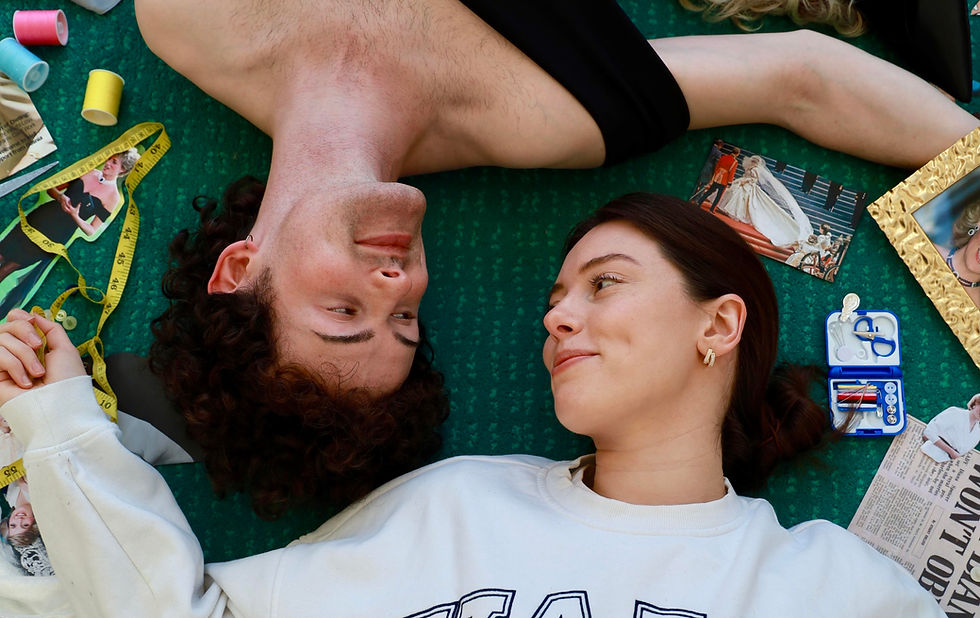
Conor Murray and Hannah Power in Don't Tell Dad About Diana. Image, Erica Verling
Not one, but two durational drudgeries, and expensive ones at that, brought the Abbey’s year to a heavy handed close. Barbara Bergin’s Dublin Gothic serving up abridged ANU, minus the exciting bits, saw Dublin history compressed into three and a half, fast paced hours. Preceded by Marina Carr’s nervously anticipated, theatrical event The Boy, directed by The Abbey’s artistic director, Caitríona McLaughlin. The rhinestone in The Abbey’s slipping crown in which Carr reformed Sophocles’s Theban Trilogy into a didactic duet (The Boy and The God and His Daughter). A twinning polemic which blunted both plays, as well as the original’s respective edges. Plays which didn’t dialogue with each other so much as rinse and repeat, redeemed by performances from Eileen Walsh and Éilish McLaughlin. The experience confirming the presence of a long standing elephant in the room, lingering for some time now like a bad habit.

Emily Terndrup in Offspring. Image, Patricio Cassinoni
Carr has written some of Ireland’s most important plays, and might yet do so again. But Carr is rapidly becoming one of the most divisive playwrights in Irish theatre. Not on account of her work, but on account of the inordinate, lopsided investment in her work which is being produced almost annually on the stage of the National Theatre where she is Senior Associate Playwright. Even if Carr wrote groundbreaking plays every year, which she clearly does not, this preferential treatment sees time, money and opportunities presented to Carr in a manner that denies them to others. A worrying trend set to continue with 2026 unveiling yet another Carr premiere at The Abbey, Mirandolina. Caitríona McLaughlin again directing.

Neill Fleming in Stuart Roche's Shard. Image, uncredited
Meanwhile, Dublin’s smaller theatre’s produced much of the more interesting work. The New Theatre, registering low on the radar, popped up during the Dublin Fringe Festival with Cara Christie’s hugely promising Brambles starring a brilliant Aoife Cassidy. Yet again it was Bewley’s Café Theatre and Glass Mask Theatre who led the charge. Bewley’s Café Theatre premiering Benjamin Reilly’s darling Mortal Sins, featuring Reilly and Isolde Fenton. Then there was Stuart Roche’s excellent Shard, brilliantly directed by Alan Smyth, and starring Neill Fleming, giving the first of this year’s Outstanding Performances. Jimmy Murphy’s The Kiss, a vital reminder of how to tell a story and make a point at the same time, saw Luke Griffin mesmerising under Lee Coffey’s direction. Coffey re-emerging as playwright in Glass Mask Theatre with Jigsaw. The best of Glass Mask Theatre’s limited season being a Rex Ryan triple threat (writer, director, performer); the hugely impactful The Monk. Seconded only by Hannah Moscovitch’s intriguing slow burner, Little One, directed to perfection by Samantha Cade, earning the Best Director nod.

Meghan Tyler in The Importance of Being Earnest. Image, Ciaran Bagnall
For some of the best work, you often had to go outside Dublin. Like Belfast, where The Lyric Theatre saw Jimmy Fay directing two strong productions. If John Morton’s apocalyptic Denouement talked bigger than it walked, it attempted to engage with deep issues. Yet it was Wilde’s The Importance of Being Earnest which proved the real treat. In which Meghan Tyler revealed herself as one of the best comic actresses around, delivering another of this year’s Outstanding Performances. For a consistent vision on a national scale, you had to go to Galway, where Druid celebrated 50 years as one of the most influential companies of the last fifty years. 2025 seeing the ever impressive Maureen Kennelly join Druid’s ranks as CEO following her tenure at the Arts Council. Local yet national, traditional yet pushing at boundaries, mixing older works and talents with fresh new experiments and artists, for many Druid demonstrate in practice what The Abbey aspire to in theory: invigorating theatre that speaks to a nation. Patrick Lonergan’s definitive history, Druid Theatre Fifty Years (Lilliput Press), serving up an embarrassment of insights, and some embarrassing insights, into Irish Theatre during the past 50 years. The always superb Galway International Arts Festival hosting Druid’s double bill celebration, Riders to the Sea and Macbeth. The latter featuring a mesmerising Marty Rea in the eponymous role. A near perfect production only for the questionable casting of Marie Mullen as an oedipal Lady MacBeth. Mullen has earned the right to play Ophelia if she wants, but that doesn’t mean she should. Mullen’s maternal Lady Macbeth looking more likely to press coins into Macbeth’s palm to buy sweets rather than engage him in the beast with two backs. Still, Macbeth had moments of utter majesty, and Mullen, in Synge’s Riders to The Sea, was utterly magnificent as an ardent matriarch whose suffering knows no bounds. Mullen, along with the legendary Garry Hynes, one of many reasons why Druid Theatre are absolutely deserving of recognition for their Outstanding Contribution to Irish Theatre.

Marty Rea and Marie Mullen in Druid's Macbeth. Image by Ros Kavanagh
In 2025 festivals, yet again, proved big attractions. Dublin Fringe Festival delighting with Hannah Power and Conor Murray’s adorable Don’t Tell Dad About Diana. DFF also featuring two of the year’s Outstanding Productions: Emily Terndrup’s searingly brilliant Offspring, and FELISPEAKS' sensational Octopus Children. Offspring's slice of dance theatre interrogating personal responsibility towards one’s art and one’s children through a reimagining of Frankenstein. Octopus Children an old story of an outsider learning to find her voice and where she fits. Presented by THISISPOPBABY, Octopus Children wove textual, theatrical and thematic elements into a rich tapestry, beautifully performed. Earning it not just an Outstanding Production recognition, but Best New Play of 2025.

Octopus Children by FELISPEAKS. Image by Pato Cassinoni
In Róise Goan’s inaugural year as artistic director, Dublin Theatre Festival proved a rather dull, politically, self conscious affair. One whose highlight, Rough Magic’s sensitive production of Peter Hanly’s What Are You Afraid Of? premiered at Kilkenny Arts Festival. For real excitement Cork Midsummer again stole the show as Best Festival, in which the women had it. Women dominating Theatre for One: Made in Cork (Landmark Productions and Octopus Theatricals in association with Cork Midsummer Festival and Cork Opera House), Caryl Churchill's all female Escaped Alone (Hatch Theatre Company, The Everyman in association with Once Off Productions), along with Irene Kelleher's double bill Footnote and the visually haunting Stitch. Yet the festival belonged to Eileen Walsh who mesmerised in the twenty-four hour marathon that was Nat Randall and Anna Breckon’s The Second Woman (Cork Midsummer Festival and Cork Opera House). THE Theatrical Event of 2025, in which Walsh ran the emotional gamut and pushed improvisational limits in one of the year’s truly Outstanding Performances. Recognition also due to Irene Kelleher’s Stitch, a profoundly moving story about a young woman physically and psychically disfigured. Housed in an old shop in Cork’s Shandon district, Stitch proved to be the year’s Best Site Specific Experience (with a tip of the cap to ANU, Landmark Productions and MoLi's The Dead, which returned to MoLi in December, and is due to return again next year). Stitch’s success due in no small measure to the immense talents of Cormac O'Connor (light and sound), Jenny White (set and props) Valencia Gambardella (costumes and masks) and Regina Crowley (director). Earning not just Best Tech Team of 2025, but Mighty Oak Productions Best Company of 2025.

Irene Kelleher in Stitch. Image, Marcin Lewandowski
Away from theatre, opera had a good year, with Blackwater Opera Festival going from strength to strength. Wexford Festival Opera yet again proved the standard bearer, with exquisite revivals of Handel’s Deidamia and Verdi’s Le Trouvére, the latter featuring sensational mezzo-soprano’s Kseniia Nikolaieva and Lydia Grindatto. There was also Peter Brook’s terrific pocket opera La Tragédie De Carmen, superbly directed by Tom Deazley. But Irish National Opera takes Best Opera Production with director Cal McCrystal’s hilariously brilliant interpretation of Donizetti’s L’elisir d’amore. In which soprano Claudia Boyle, one of our greatest operatic actors, and bass Gianluca Margheri set hearts aflutter.

Eileen Walsh in The Second Woman. Image, Jed Niezgoda
Despite Matthew Bourne’s utterly gorgeous Swan Lake crowning Dublin Dance Festival, locally, dance had a quieter year. The newly minted Luail, the Irish National Dance Company, announcing itself with the impressively promising Chora and the less imaginative crowd pleaser Reverb. Luke Murphy’s Scorched Earth proved an intriguing piece of dance theatre, as did John Scott’s Irish Modern Dance Theatre’s celebration of all things Merce Cunningham, Begin Anywhere. Yet the Best Dance Production, and one of the Outstanding Productions of 2025, was Emily Terndrup’s Gothic toned, Offspring, so good you wish you could see it twice.

Claudia Boyle in Irish National Opera's L’elisir d’amore. Photo, Ros Kavanagh
On the miscellaneous list, the under appreciated Viking Theatre, celebrated its 14th year with a lovely revival of Seamus O’Rourke’s The Sand Park rounding out 2025. The Viking also the starting point for the year’s Best Touring Production, Paddy - The Life and Times of Paddy Armstrong by Mary-Elaine Tynan, Don Wycherley and Niamh Gleeson. Don Wycherley simply sensational in another of this year’s Outstanding Performances. Meanwhile a brilliant revival of Conor McPherson’s The Weir (Landmark Productions and Kate Horton Productions in association with 3Olympia Theatre), featuring a formidable Brendan Gleeson, proved to be one of this year’s Outstanding Productions. The ever brilliant Landmark Productions also behind ANU's hugely successful The Dead, in association with MoLi. Elsewhere The Ferryman at The Gaiety was also something special, along with Steve Coogan’s Dr. Strangelove at Bord Gáis Energy Theatre earlier in the year. Children’s theatre saw Branar’s delightful How To Catch A Star and Dan Colley’s The Maker stealing young hearts and minds. Winning hearts and minds, Fishamble: The New Play Company took to touring Pat Kinevane’s work internationally to great acclaim. As well as producing The Black Wolfe Tone by Kwaku Fortune, which premiered in New York and showed immense promise. Back home, Smock Alley Theatre rounded out their year out with an impressive Uncle Vanya, directed by Cathal Cleary, while Decadent Theatre premiered Christian O’Reilly’s family drama, Ferocity, in Galway, in which Mark Lambert gave a stunningly creepy performance. Decadent, with Galway Arts Centre, also behind Simon Stephen’s T5 and Sea Wall at GIAF. Finally, two books well worth adding to any collection. If Patrick Lonergan’s impressive Druid Theatre Fifty Years (Lilliput) captures the sweep of history, one specific moment in history is explored in WTF Happened: #Waking The Feminists and the Movement That Changed Irish Theatre by Lian Bell Sarah Durcan (UCD Dublin). Both essential reading.

Don Wycherley in Paddy - The Life and Times of Paddy Armstrong. Image uncredited.
So what does 2026 hold? Jonathan Spector’s Eureka Day and Conor McPherson's The Brightening Air certainly whet the appetite at The Gate, along with Wilde’s An Ideal Husband. At The Abbey Una McKevitt’s highly anticipated Fair Deal and Do You Come From Gomorrah? by Frank McGuinness both intrigue. As does the return of Annie Ryan directing The White Headed Boy. Another revival of a forgotten play, accompanied by The Plough and The Stars, directed by Tom Creed, honouring its centenary, even if Druid covered it recently. Finally there’s Mirandolina inspired by Italian playwright Carlo Goldoni’s masterpiece, La Locandiera, by Marina Carr. Think that’s been covered enough already. Elsewhere, Glass Mask Theatre premiere a new Simon Stephen’s play A Slow Fire and Irish National Opera scale operatic heights with the classic that is Bellini’s Norma.

Emer Dineen in A Misanthrope. Image, Ros Kavanagh
Yet 2026’s real promise lies in a rich array of promising talent, many seen during 2025. Like the brilliant Sarah Morris, who shone in The Ferryman, Dublin Gothic and T5. Dan Monaghan, also shining in Dublin Gothic, was practically luminescent in Hannah Moscovitch’s Little One, directed impeccably by Samantha Cade. Emer Dineen in Matt Minnicino, after Molière’s A Misanthrope confirming, yet again, she is of superstar quality. As is Meghan Tyler. Then there’s Hannah Power and Conor Murray, who both delighted in Don’t Tell Dad About Diana, promising great things to come.

Hannah Brady and Dan Monaghan in Little One, Image, Matthew Williamson
Too often theatre can operate from a corporate mission statement rather than a sense of vision. The data all adding up, but amounting to not enough. Core values so abstract and generalised as to risk being practically meaningless, applicable to justifying any and every scenario. The dice feeling loaded, the game rigged as companies navigate the treacherous waters between shows that appeal to the masses and those specifically designed for a given audience. As a critic you try speak from a spirit of generosity. But sometimes the most generous thing to do is to say what’s not being said out loud. To highlight what’s often being ignored, even if it hurts in the short term. Currently, there’s immense unease and dissatisfaction in the air, vividly evident in the ongoing saga with The Complex. Hope lying in works like Octopus Children, artists like Eileen Walsh, and experiences like L’elisir d’amore. To those teasing out theatre’s uncertain future, making work under hugely challenging conditions, you have our deepest gratitude, even if we don’t always share your ideas. What we try promote are real, critical conversations. So here’s raising a glass in thanks to you all, and wishing everyone a productive and prosperous 2026. Slainte.
Recognition of Outstanding Achievement 2025
Best Productions
The Weir by Conor McPherson (Landmark Productions and Kate Horton Productions in association with 3Olympia Theatre)
Octopus Children by Felispeaks (THISISPOPBABY)
Offspring by Emily Terndrup (Emily Terndrup)
Best Performances
Eileen Walsh for The Second Woman (Cork Midsummer) and The Boy (Abbey Theatre)
Meghan Tyler for The Importance of Being Earnest (Lyric Theatre)
Neill Fleming for Shard (Bewley’s Cafe Theatre)
Don Wycherely for Paddy - The Life and Times of Paddy Armstrong (Wooden Bridge Productions - Touring)
Best Director
Samantha Cade for Little One (Glass Mask Theatre)
Best New Play
Octopus Children by FELISPEAKS (THISISPOPBABY)
Best Site Specific Experience
Stitch by Irene Kelleher (Cork Midsummer)
Best Company
Might Oak Productions (Cork Midsummer)
Best Tech
Stitch by Irene Kelleher - Cormac O'Connor (light and sound), Jenny White (set and props) Valencia Gambardella (costumes and masks) and Regina Crowley (director)
Best Opera
L’elisir d’amore by Donizetti (Irish National Opera)
Best Dance
Offspring by Emily Terndrup (Emily Terndrup)
Best Festival
Cork Midsummer Festival
Best Touring Production
Paddy - The Life and Times of Paddy Armstrong (Wooden Bridge Productions)
Outstanding Contribution to Irish Theatre
Druid Theatre Company
Theatrical Event of The Year
Eileen Walsh in The Second Woman (Cork Midsummer Festival and Cork Opera House)


