Physical Landscape


Physical Landscape. Image, Ewa Figaszewska
***
T. S. Eliot claimed there is more to the poem than the poet knows themselves. Including elements they may not intend to be there. Which might be the case with choreographer John Scott’s Physical Landscape. Irish Modern Dance Theatre’s latest offering falling loosely into three sections. Working backwards, the third is a predominantly collective exercise built on a heft of found movement. The second an intriguing conversation between more formally choreographed sequences built from free flowing duets to Jürgen Simpson’s fascinating score. The first a playful curiosity not quite as innocent as it thinks. One, you could argue, that represents practices Scott and Irish Modern Dance Theatre find utterly anathema.
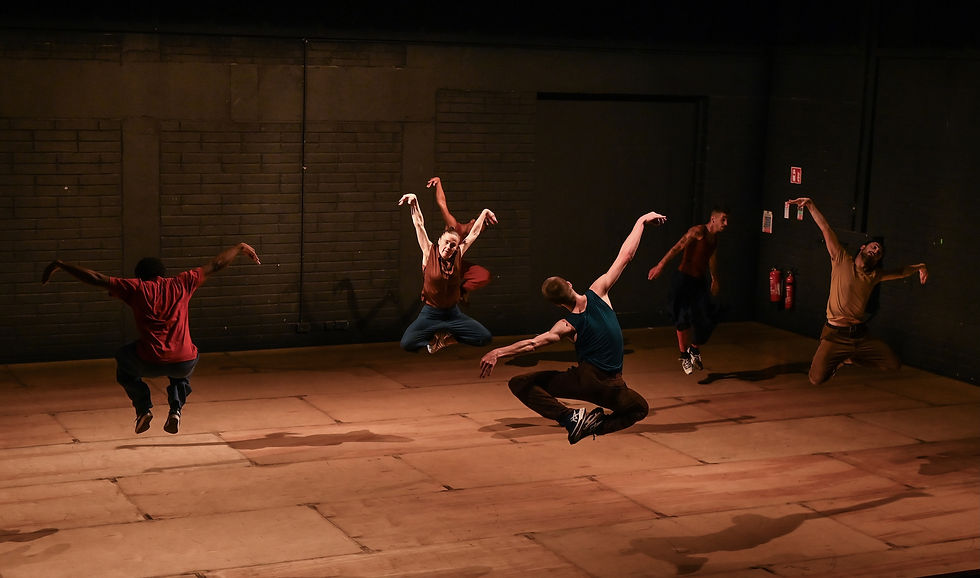
Physical Landscape. Image, Ewa Figaszewska
In pre-show preparation, dancers meditate and stretch as if warming up for a yoga class. Nothing unusual so far. Then, like unquestioning sheep, the audience are rounded up and herded onto the stage. Dancers, like attentive sheepdogs, or mildly intimidating prison guards, circle their compliant flock. For twenty mildly humorous minutes an adult Sesame Street sketch unfolds. Dancers, corralling the audience, hopscotch through the alphabet like children’s TV presenters, listing words and names with big smiles and gestures. Respectful and significant pauses on selectively emphasised words like genocide, Palestine, racism punching out the big political message like a left-wing 1984 rally. The whirlwind of verbal and visual barrage echoing the brainwashing scene from A Clockwork Orange. Establishing the artistic and political frame through which everything that follows is viewed.
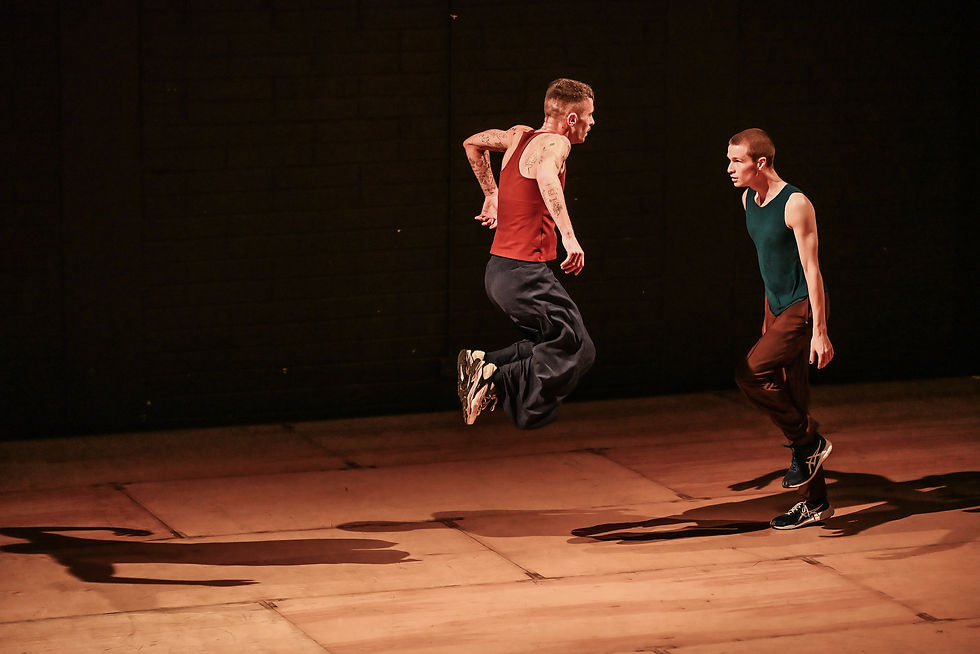
Physical Landscape. Image, Ewa Figaszewska
Released from their stage pen, the audience return to their seats for an intriguing conversation between some of Scott’s best choreography and Jürgen Simpson’s disrupted soundtrack. Simpson’s score establishing a baseline of rhythmic, patterned dissonance for both music and movement. Throughout, dancers drift in and out of mirroring duets; stationary, moving in intricate patterns, walking in circles till the collective follow. Leaps, spins and circular flow dominating as scenes evolve with glorious fluidity. The final sequence, a haberdashery of found movements, reveals the body as a site of shared tensions and release. The whole overly familiar with too few striking or original images: Stomp-like stamping, bodies pooled on the floor like the aftermath of an orgy or corpses piled in a communal grave, face-pulling, sneezes, arms whipped and extended. A final sequence in which dancers line up and move forward to balance repeatedly on one foot drags on till they finally walk off stage. The end less a choreographic bang so much as a durational whimper.
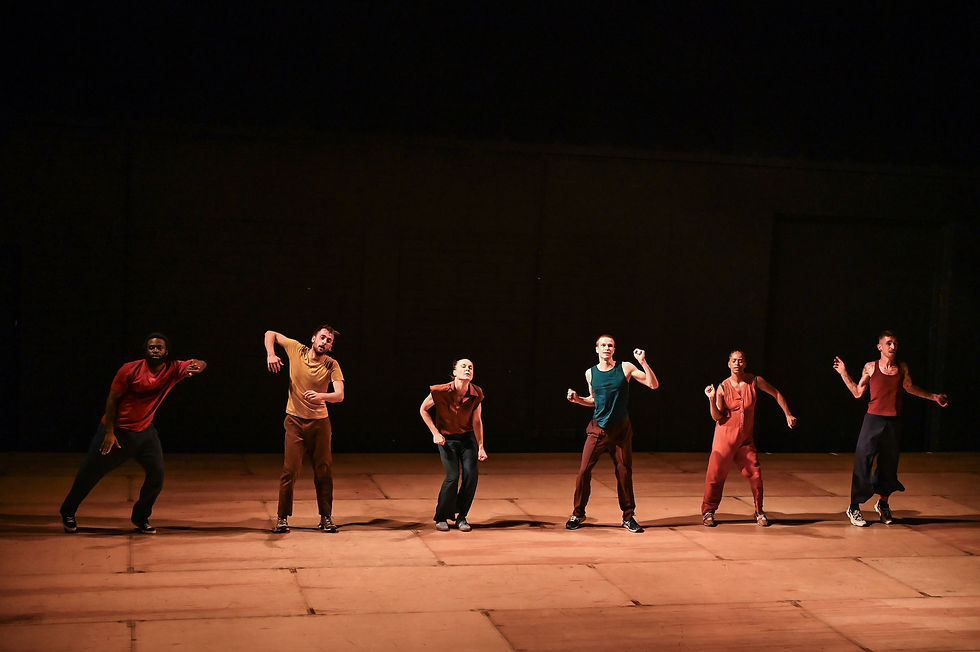
Physical Landscape. Image, Ewa Figaszewska
Choreographically, Physical Landscape plays it safe. Dancers, Magdalena Hylak, Boris Charrion, Alessandra Azeviche, Adam O’Reilly, François Malbranque, and Favour Odusola individually and collectively terrific, with Azeviche showing impressive dexterity. Yet there's a question as to the manner in which Physical Landscape’s artistry seems secondary to its politics. It does not matter that you probably agree with its politics. Herding compliant acolytes and bombarding them with the political message they want to hear is more the opposite side's tactics, tantamount to preaching to the converted. Manipulations which, if you have to resort to them so heavy handedly, undermines artistry. Artistry that, when it shines, reminds you that Scott is a formidable choreographer.
Physical Landscape by John Scott and Irish Modern Dance Theatre runs at Project Arts Centre until October 31.
For more information visit Project Arts Centre.


