Cork Midsummer Festival 2026: The Lost Tapes of Lydia Howell

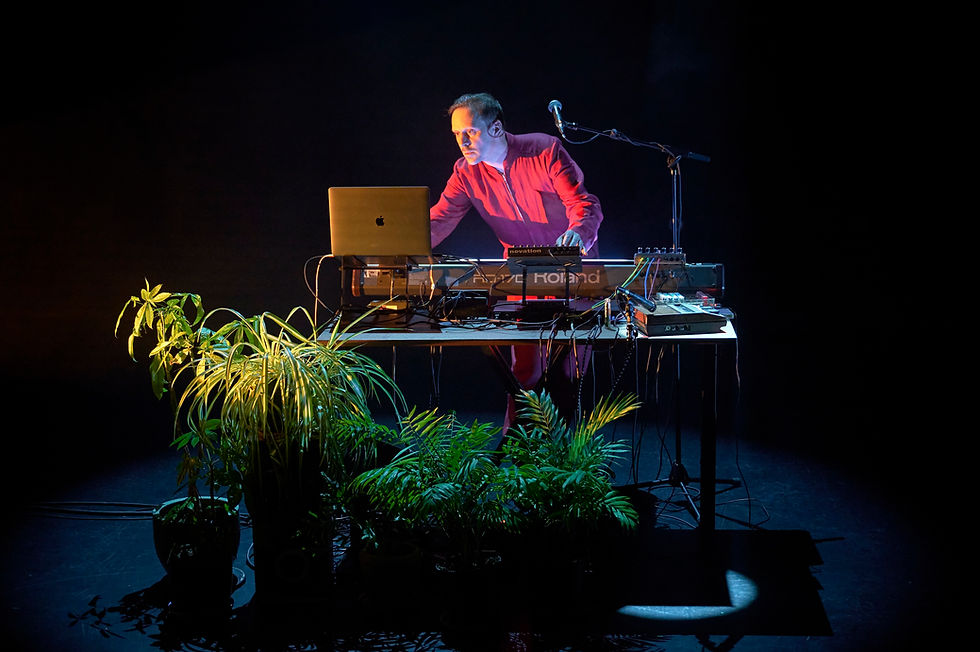
The Lost Tapes of Lydia Howell. Image, Ros Kavanagh.
***
If you were to outline a theme for Cork Midsummer Festival 2026, it might be artistic almost rans accepting their fate or rediscovering their mojo. Often blushed with a touch of rediscovered art. Ray Scannell’s meditative and moving The Lost Tapes of Lydia Howell embodying all of the above. Beguilingly simply, Scannell’s story within a story results in leaden storytelling theatre offset by beautiful, musical interludes. Director Tom Creed marshalling tender strengths to counteract significant challenges.
Narratively, there’s not all that much going on. The creatively blocked Stanley, an emotionally stunted, self obsessed man-child, seeks accommodation from crone like Helen in her haunted house. Moving in for an indefinite trial period alone, he rescues an old tape recorder and a box of cassettes thrown into a skip. Discovering the voice journal and musical ideas of Lydia Howell. Another fraternity member of Dave Fanning's greatest bands that never were league. As Lydia’s story emerges, the shift from monologue to musical conversation tracks a subtle path to re-creation and resurrection. One whose final resolution proves poignant, tender and deeply affecting.
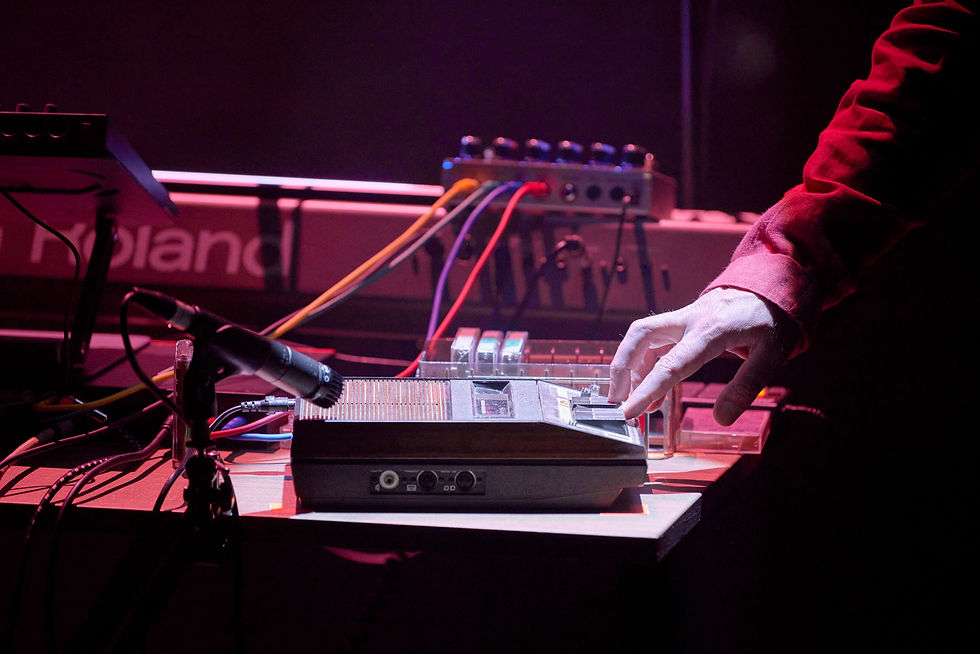
The Lost Tapes of Lydia Howell. Image, Ros Kavanagh.
Under Tom Creed's sensitive direction The Lost Tapes of Lydia Howell yields up touching, heartfelt moments greater than the sum of its individual parts. Stanley, barefoot and dressed in a red boiler suit, suggesting an out of work mechanic, addresses the audience in between snippets played from a selection of cassettes. Claire Dunne’s disembodied voice conjuring the laughing, chain-smoking Lydia whose heavy breathing sounds like she’s hyperventilating or making an obscene phone call. Gradually eclipsing Stanley as the play’s central character. If Stanley is haunted, we do not really know his ghosts. In contrast, Lydia’s haunting is steeped in recognisable specificity; an awkward threesome, an album on the horizon and a band of close friends torn by inner tensions. Throughout, three voices inhabit the stage; Stanley’s, Lydia’s, and Scannell’s. Heavy handed literariness serving up a striking contrast with easy flowing dialogue as the author holds the verbal reins too tightly. In fairness, structurally, Scannell uses his word heavy descriptiveness to accommodate a clever reversal. And if novelistic tedium weighs throughout, it resolves into something beautiful towards the end.
Despite supernatural symbolism of foxes and ghosts, when you strip it right back The Lost Tapes of Lydia Howell is haunted by the ghost of John Carney’s Once. A mirrored tale of a stuck, male musician finding musical and personal salvation in collaboration with a neglected female counterpart. The details might be different, but the songs remain the same. With Scannell’s superb compositions, featuring sound design and additional compositions by Rob Moloney, deeply haunting. Tender duets between live and recorded voice, between the living and forgotten, ensure that if words often strain, music soars. If monologue is staid, conversation sings. Like its protagonists, The Lost Tapes of Lydia Howell might not hit the heady heights of fame. But if you think about your personal soundtrack, it probably includes many lesser known gems that hit like nothing else can. As will The Lost Tapes of Lydia Howell.
The Lost Tapes of Lydia Howell by Ray Scannell, presented by Once Off Productions, runs as part of Cork Midsummer Festival 2026 until June 21st.
For more information visit Cork Midsummer Festival 2026


